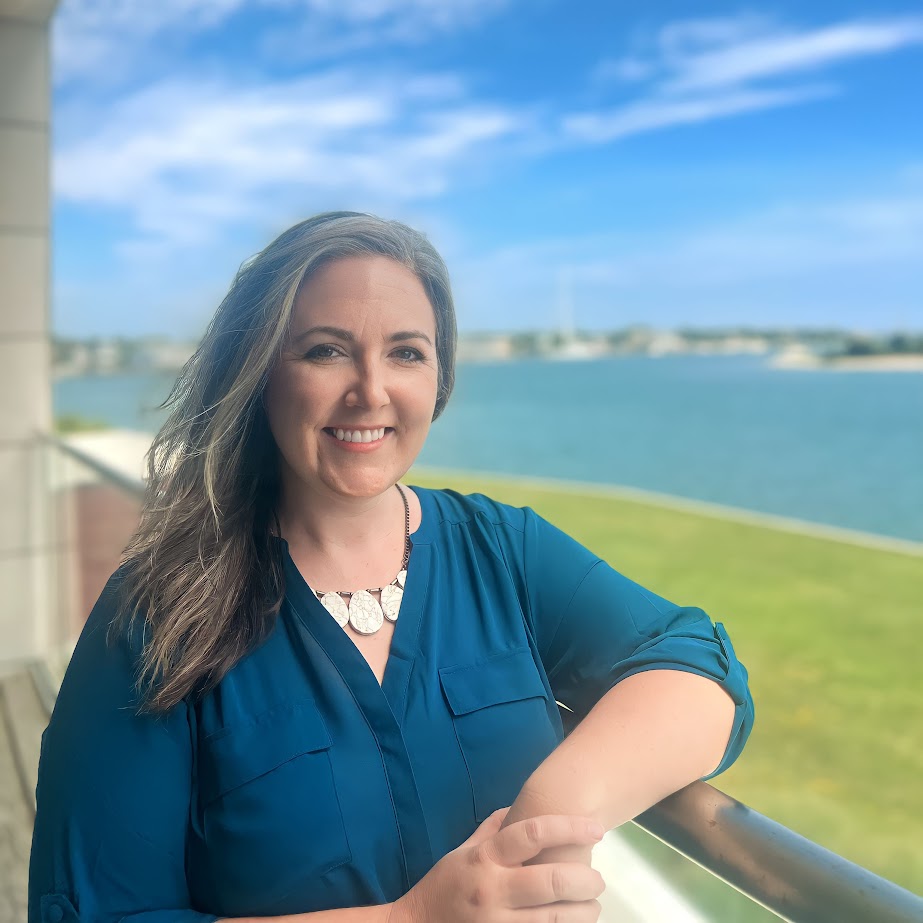
Who I Am
I am a human geographer, and my research interests are broadly focused on ocean governance and human relationships with marine and coastal environments. I am interested in how power and politics shape environmental decision-making across multiple scales, particularly with respect to Small Island Developing States (SIDS). I am interested in how global processes shape what happens at the national, regional, and local level, and in turn, how smaller-scale processes can be circulated and translated elsewhere. I recognize that research is performative, and the goal of my work is to go beyond critique and co-create knowledge that might lead to more equitable, just, and sustainable environmental futures.
How I Got Here and Where I’m Going
I spent my undergraduate career as a natural scientist, working with primates at the University of Wisconsin in the lab of Dr. Charles Snowden, a wonderful mentor who provided me with endless encouragement and an exceptional research experience. When I decided not to pursue a career in zoology, I was left uncertain as to my future. In the year after I graduated, I made the decision to go to law school after passing USF Law School on the bus, and recalling that there was a particular field of law (patent law) well suited to scientists. I often quip that much like the great legal mind Elle Woods, I essentially woke up and thought “I think I’ll go to law school today.”
After completing my JD, I spent approximately the next ten years working as a patent litigator for two large law firms in Chicago. While I loved the excitement of the courtroom, was good at what I did, and (somewhat remarkably in the law) liked the people I worked with, I lacked purpose and became frustrated with the inherently adversarial legal system. While I had long understood that the intended purpose of patents was to incentivize innovation, I began to question that view and my role in a system that commodified rights to knowledge. I found temporary escape through travel. I learned to SCUBA dive while on vacation, and whenever I could, I would escape Chicago for warm beaches, salty waters, and crackling coral reefs. (If you’ve never experienced the underwater world–they really crackle!) I was immersed in a world where no one could reach me, I was weightless, and I felt connected to an endless seascape of sights, sounds, and life. Without recognizing it at the time, I was learning a different ontology of the ocean as place of lived experience and relationality. My favorite place for a quick escape became Andros Island in The Bahamas. Through the course of these trips, I became increasingly concerned about the declining health of the reefs, and what it would mean for the future for the friends I had made there, whose livelihoods depended on coral-based tourism.
Eventually, I made the decision to leave private practice and do something, anything, in marine conservation. I enrolled in the Master of Environmental Management program at Duke University, intending to work in government or an NGO doing policy-related work or environmental litigation. When I entered the program, started working with Dr. Lisa Campbell, and became exposed to literature, scholars, and colleagues thinking about power and politics, I decided I decided to pursue a PhD. I began at the University of Southern Mississippi in the lab of Dr. Leslie Acton, and eventually returned to Lisa’s lab at Duke after Leslie accepted a new position. I have continued to return to The Bahamas, conducting my Masters work on Andros and working with a team to start the Small Hope Bay Foundation, a 501(c)(3) organization with a mission to to create a thriving environmental and economically sustainable future for the island of Andros for the benefit of current and future generations. I am now expanding my work in The Bahamas beyond Andros, designing a project and seeking permitting to conduct my dissertation work on Grand Bahama. Inspired by the work of both Lisa and Leslie, I have also began working on projects tracking ocean governance and proposals for sustainable development at the global level. I am now a member of the Digital Oceans Governance Lab, an interdisciplinary team led by Lisa and Dr. Elizabeth Havice, which examines the intersection between the proliferation of ocean data and increased interest in oceans governance.
This long and winding road has given me a unique perspective with which to approach both research and teaching. I have a working understanding of the natural sciences and am also able to understand and analyze complex legal regimes, which provides me with a solid foundation to understand the social-environmental interactions that I study as a human geographer. At the same time, inspired by my experience and relationships in The Bahamas and around the world, I have pressed myself to challenge how I see and relate to the world, both as a scholar and as a person. I am interested in thinking about these issues globally as well, thinking about how small-scale processes and ontologies might be used to disrupt global neoliberal discourses. I hope to continue this research across multiple scales beyond my dissertation, including in more action-based, community-led work. I also hope to work with a new generation of students, and inspire them to follow their passions and work toward a more just and sustainable future.
Theoretical Influences and Favorite Readings
I draw on a wide range of theory and traditions in and related to human geography. This includes community and diverse economies, political ecology, Black geographies, Caribbean and island geographies, and a wide range of social science work on ocean geographies and governance. I enjoy thinking with how diverse theoretical perspectives come together in the cases I study. While far too many scholars have influenced me to list them all, before is a list of some pieces that I have enjoyed and that have shaped my thinking.
Acton, Leslie, Lisa M. Campbell, Jesse Cleary, Noella J. Gray, and Patrick N. Halpin. 2019. “What Is the Sargasso Sea? The Problem of Fixing Space in a Fluid Ocean.” Political Geography 68 (January): 86–100.
Gibson-Graham, J.K. 2006. A Postcapitalist Politics. Minneapolis: University of Minnesota Press.
Gibson-Graham, J. K., and Kelly Dombroski, eds. 2020. The Handbook of Diverse Economies. Cheltenham UK: Edward Elgar Publishing Limited.
Massey, Doreen. 2005. For Space. London: SAGE Publications.
McKittrick, Katherine. 2021. Dear Science and Other Stories. Duke University Press.
Moore, Amelia. 2019. Destination Anthropocene: Science and Tourism in The Bahamas. Oakland, California: University of California Press.
Moore, Amelia. 2023. “Black Atlantis.” In: Howe C, Diamanti J, and Moore A (eds) Solarities: Elemental Encounters and Refractions. 1st ed. Earth, Milky Way: punctum books.
Moulton Alex A. and Inge Salo. 2022. “Black Geographies and Black Ecologies as Insurgent Ecocriticism.” Environment and Society 13(1).
Peters, Kimberley. 2020. “The Territories of Governance: Unpacking the Ontologies and Geophilosophies of Fixed to Flexible Ocean Management, and Beyond.” Phil. Trans. R. Soc. B 375: 20190458.
Rankin, William. 2016. After the Map: Cartography, Navigation, and the Transformation of Territory in the Twentieth Century. University of Chicago Press.
Roane, JT. 2018. “Plotting the Black Commons.” Souls 20(3). Taylor & Francis: 239–266.
Sharpe, Christina. 2016. In the Wake: On Blackness and Being. Durham, NC: Duke University Press.
Strachan, Ian Gregory. 2002. Paradise and Plantation: Tourism and Culture in the Anglophone Caribbean. United States of America: University of Virginia Press.
Steinberg, Philip E. 2001. The Social Construction of the Ocean. Cambridge, UK: Cambridge University Press.
Steinberg, Philip E., and Kimberley Peters. 2015. “Wet Ontologies, Fluid Spaces: Giving Depth to Volume through Oceanic Thinking.” Environment and Planning D: Society and Space 33(2): 247–64.
Tsing, Anna Lowenhaupt. 2015. The Mushroom at the End of the World: On the Possibility of Life in Capitalist Ruins. Princeton, NJ: Princeton University Press.
West, Paige. 2006. Conservation Is Our Government Now: The Politics of Ecology in Papua New Guinea. Durham and London: Duke University Press.
This trio of papers on data portals:
- Boucquey, Noëlle, Kevin St. Martin, Luke Fairbanks, Lisa M Campbell, and Sarah Wise. 2019. “Ocean Data Portals: Performing a New Infrastructure for Ocean Governance.” Environment and Planning D: Society and Space 37(3): 484–503.
- Campbell, Lisa M., Kevin St. Martin, Luke Fairbanks, Noelle Boucquey, and Sarah Wise. 2020. “The Portal Is the Plan: Governing US Oceans in Regional Assemblages.” Maritime Studies 19(3): 285–97.
- Fairbanks, Luke, Lisa M. Campbell, Noëlle Boucquey, and Kevin St Martin. 2018. “Assembling Enclosure: Reading Marine Spatial Planning for Alternatives.” Annals of the American Association of Geographers 108(1): 144–61.
 Emily Melvin